Source waterproof ac switch timer for Industrial, Kitchen, and Timer Switch
Find a selection of 30 waterproof ac switch timer units designed for industrial, kitchen, and timer switch applications. Buyers can compare models like TB338, SUL180A, and AHC15A based on voltage ratings, current capacity, and customization options available from suppliers in Zhejiang, China.
Key considerations
Products List




Comprehensive Sourcing Guide
Strategic Sourcing Guide for Waterproof AC Switch Timer Solutions
Understanding the Technical Landscape of Industrial Timer Switches
When sourcing a waterproof AC switch timer, buyers must first navigate a complex technical landscape where "waterproof" capabilities often coexist with diverse internal mechanisms. The available market data indicates a significant divergence in product theory, ranging from mechanical to digital and electronic implementations. Understanding these distinctions is critical because the internal architecture directly influences the device's ability to withstand moisture and its operational reliability in industrial environments.
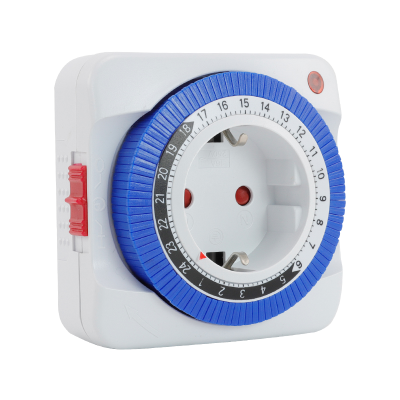
The observed product attributes reveal that mechanical timers often utilize a quartz mechanism, offering a robust, non-electronic approach to timekeeping. These devices typically feature a dial with 96 pins and a minimum setting interval of daily 15 minutes. In contrast, digital and electronic variants, such as those identified by models like AHC15A and AHC-30A, offer programmable functionality with up to 48 on/off programs. These digital units often employ a synchronous counter carry mode, allowing for precise addition counting and countdown operations ranging from one second to 99 minutes and 59 seconds.
A critical technical parameter for any waterproof timer is the electrical rating. The supply data highlights a consistent voltage range of 100-240VAC, with specific units rated for AC 220V at 50/60Hz. The maximum voltage limit is frequently observed at 250VAC, which is a standard threshold for industrial applications. However, the current handling capacity varies significantly. Some units are rated for a maximum current of 16A, suitable for resistive loads, while others, such as the AHC-30A model, support a rated current of 30A. This distinction is vital; a 16A unit may be insufficient for high-power industrial machinery, whereas a 30A unit provides greater headroom for heavy-duty applications.
Furthermore, the material composition plays a pivotal role in waterproofing. The data specifies the use of non-flammable PC (Polycarbonate) material for the housing. This material choice is essential for safety and durability, ensuring the device can resist environmental degradation while maintaining electrical isolation. The IP rating, specifically IP20, is noted for certain models, which indicates protection against solid objects larger than 12.5mm but does not inherently guarantee waterproofing against liquid ingress. Buyers must therefore verify if the "waterproof" claim refers to the specific housing design or if additional sealing measures are required, as the standard IP20 rating alone is not sufficient for wet environments.
Compliance and Certification Verification Protocols
In the B2B procurement of electrical components, compliance is not merely a formality but a prerequisite for market access and operational safety. The sourcing guide must emphasize rigorous verification of certifications, as the supply data presents a mix of standard and specific compliance marks. The observed certifications include CE, ISOCCC, ISORoHS, and CCC. These marks indicate adherence to European safety standards (CE), Chinese compulsory certification (CCC), and restrictions on hazardous substances (RoHS).
However, the presence of these certifications in the product listing does not automatically guarantee that every unit in a bulk order possesses valid, current certification status. Buyers must treat these as observations of the product line rather than absolute guarantees for every individual batch. The distinction between "CE" and "ISOCCC" is particularly important; while CE is a self-declaration for the European market, CCC is a mandatory requirement for products sold within China. For international procurement, the CE mark is often the primary focus, but buyers should request valid test reports from accredited laboratories to confirm that the specific batch being purchased has undergone the necessary electrical safety testing.
The "Non Flammable PC" material mentioned in the specifications also aligns with fire safety standards, but buyers should verify if the specific formulation meets UL or IEC standards for flammability, especially if the timer is intended for use in enclosed electrical panels. Additionally, the "ISOCCC" and "ISORoHS" labels suggest a focus on environmental and quality management systems. It is imperative for the buyer to request the actual certificate documents, including the certificate number and the issuing body, to validate their authenticity. Relying solely on the supplier's claim without documentary evidence can lead to significant compliance risks, particularly in regulated industries where electrical safety is paramount.
Cost Drivers and Pricing Dynamics in the Market
The pricing structure for waterproof AC switch timers is influenced by a combination of technological complexity, material costs, and order volume. The observed price range in the market spans from $0.30 to $7.00 USD, a wide variance that reflects the differences between basic mechanical timers and advanced digital programmable units. The lower end of this spectrum typically corresponds to mechanical timers with simple quartz mechanisms and limited functionality, such as the TB338 model. These units rely on fewer electronic components, reducing the overall manufacturing cost.
Conversely, the higher price points, approaching $7.00, are associated with digital and electronic models like the AHC series. These units incorporate microcontrollers, digital displays, and complex programming logic that allows for up to 48 on/off cycles. The cost of the non-flammable PC housing, which is more expensive than standard ABS plastic, also contributes to the price differential. Additionally, the current rating is a significant cost driver; a 30A unit requires larger internal contacts and more robust wiring compared to a 16A unit, increasing the material and assembly costs.
Minimum Order Quantity (MOQ) is another critical factor affecting the total cost of ownership. The observed MOQ range spans from 1 to 2,000 units. For small-scale procurement or prototyping, buyers may face a higher per-unit cost due to the low MOQ flexibility. However, for large-scale industrial deployments, negotiating an MOQ closer to 2,000 units can significantly reduce the per-unit price. The packing standard, observed as 100PCS/CTN or 48PCS/CTN, also impacts logistics costs. Bulkier packaging with fewer units per carton may increase shipping expenses, whereas denser packing can optimize freight efficiency. Buyers should analyze the total landed cost, including shipping and duties, rather than focusing solely on the unit price to make an informed financial decision.
Typical Applications and Operational Environments
The versatility of waterproof AC switch timers allows them to be deployed across a wide array of industrial and commercial sectors. The data indicates applications ranging from general industrial use to specific kitchen environments. The "Industrial" tag suggests usage in manufacturing plants, where timers control machinery cycles, lighting systems, or ventilation units. In these settings, the robustness of the device is essential to withstand dust, vibration, and potential exposure to moisture.
The "Kitchen" application points towards commercial food service environments, where timers might control ovens, fryers, or dishwashers. In these scenarios, the non-flammable PC material and the ability to handle resistive loads are crucial for safety. The "Multifunctional" designation implies that these devices can be adapted for various control tasks, such as pump control, irrigation systems, or HVAC regulation. The "Timer Switch" and "Time Counter" functionalities further expand their utility to inventory management and production tracking, where accurate counting and timing are required.
However, the specific "IP20" rating noted in the data presents a limitation for truly wet environments. While the product is marketed as a "waterproof" timer, the IP20 rating technically only protects against solid objects and does not prevent water ingress. Buyers intending to use these timers in outdoor settings or areas with high humidity must verify if the specific model includes additional sealing features, such as gaskets or conformal coating on the circuit board, that are not explicitly listed in the standard specifications. For applications requiring true waterproofing (e.g., IP65 or IP67), buyers must explicitly request and verify these higher ratings from the supplier, as the standard data does not confirm such capabilities.
Supplier Evaluation and Quality Assurance Standards
Evaluating suppliers for waterproof AC switch timers requires a multi-faceted approach that goes beyond price and basic specifications. The supply data indicates that products originate from Zhejiang, China, a region known for its manufacturing capabilities but also for varying quality standards. Buyers should prioritize suppliers who can provide transparent documentation regarding their production processes and quality control measures.
The "Export Packaging" and "Conventional Export Packaging" mentioned in the data suggest that the supplier has experience with international shipping standards. However, buyers should verify the specific packaging details to ensure that the products are protected against moisture and physical damage during transit. The "Carton" standard of 954cm for certain models indicates a compact packaging solution, which is beneficial for storage and shipping efficiency.
Quality assurance should be a central part of the supplier evaluation. Buyers should request a copy of the supplier's quality management system certification, such as ISO 9001, in addition to the product-specific certifications like CE and CCC. It is also advisable to conduct a factory audit or request a third-party inspection report to verify the production line's capability to maintain consistent quality. The "Single Control Switch" and "Single item" selling units suggest that the supplier may cater to both bulk and sample orders, which is a positive indicator of flexibility. However, buyers must ensure that the supplier has the capacity to maintain quality consistency across different batch sizes, especially when scaling up from a single item to a large order.
Long-Term Procurement and Maintenance Considerations
Sourcing waterproof AC switch timers is not just a one-time transaction but a long-term partnership that requires careful planning for maintenance and replacement. The "Back-up Time" of 100 hours observed in some models is a critical feature for ensuring data retention during power outages. Buyers should verify if this back-up time is sufficient for their specific operational requirements, particularly in environments where power interruptions are frequent.
The "Addition Counter" and "Carry Mode: Synchronous Counter" functionalities suggest that these devices can be used for cumulative counting tasks. Over time, the mechanical parts of these counters may wear out, leading to inaccuracies. Buyers should establish a maintenance schedule that includes regular calibration and inspection of the counter mechanisms. For digital units, the "Power Consumption" of 7.5VA (Max) should be considered in the overall energy management strategy of the facility.
Furthermore, the "Lagging Load" rating of 10A/250VAC versus the "Resistive Load" rating of 16A/250VAC highlights the importance of matching the timer to the specific type of load it will control. Inductive loads, such as motors, can cause higher inrush currents and voltage spikes that may damage the timer over time. Buyers should ensure that the selected timer is rated for the specific load type and consider adding surge protection devices to extend the lifespan of the equipment.
Finally, the "Customization: Available" attribute offers an opportunity for buyers to tailor the timer to their specific needs. This could include custom dial settings, specific wiring configurations, or unique branding. However, customization often comes with longer lead times and higher MOQs. Buyers should plan their procurement cycles accordingly to avoid delays in production. By focusing on these long-term considerations, buyers can ensure a reliable supply chain and minimize operational disruptions in the future.
Summary of Key Technical Parameters
To facilitate quick decision-making, the following table summarizes the key technical parameters observed in the supply data. This comparison highlights the diversity of options available and the critical differences between mechanical and digital models.
| Parameter | Mechanical/Quartz Models | Digital/Electronic Models |
|---|---|---|
| Product Theory | Mechanical | Digital / Electronic |
| Mechanism | Quartz | Electronic Counter |
| Dial Type | Dialy 96 Pins | Programmable (48 on/off) |
| Setting Interval | Daily 15 Minutes | 1 Sec - 99min 59 Sec |
| Voltage Rating | 100-240VAC | AC 220V 50/60Hz |
| Max Current | 16A | 16A - 30A |
| Material | Non Flammable PC | Non Flammable PC |
| IP Level | IP20 | IP20 (Verify for Waterproofing) |
| Certification | CE, ISOCCC | CE, ISORoHS, CCC |
| Origin | Zhejiang, China | China |
This table serves as a reference point for buyers to quickly identify the model that best fits their technical requirements. However, it is essential to remember that these are observed attributes and not guaranteed specifications for every unit. Buyers must always verify the specific details of the product they intend to purchase through direct communication with the supplier and by reviewing the official product datasheets.
FAQs
What certifications are available for these timers?
Available certifications include CE, ISOCCC, ISORoHS, and CCC. Buyers must verify specific batch documentation as listings show observations rather than absolute guarantees for every unit.
Which voltage ratings do the products support?
Products support a voltage range of 100-240VAC with specific units rated at AC 220V 50/60Hz. The maximum voltage limit is frequently observed at 250VAC for industrial applications.
How do mechanical and digital timers differ in function?
Mechanical timers use a quartz mechanism with a 96-pin dial, while digital models offer up to 48 on/off programs. Digital units also feature synchronous counter carry modes for precise counting.
Can these timers handle high current loads?
Yes, some models handle 16A resistive loads while others like the AHC-30A support up to 30A. The current capacity varies significantly between basic and heavy-duty industrial units.
What is the typical MOQ for these products?
The observed minimum order quantity ranges from 1 to 2000 units. Lower MOQs suit prototyping, while larger orders near 2000 units can reduce the per-unit price significantly.
Where are these timers manufactured?
Products originate from Zhejiang, China, a region known for manufacturing capabilities. Buyers should verify quality control measures as standards vary across different suppliers in this location.
What material is used for the housing?
The housing is made from non-flammable PC (Polycarbonate) material. This choice ensures safety and durability, though buyers should verify specific flammability standards for enclosed panels.